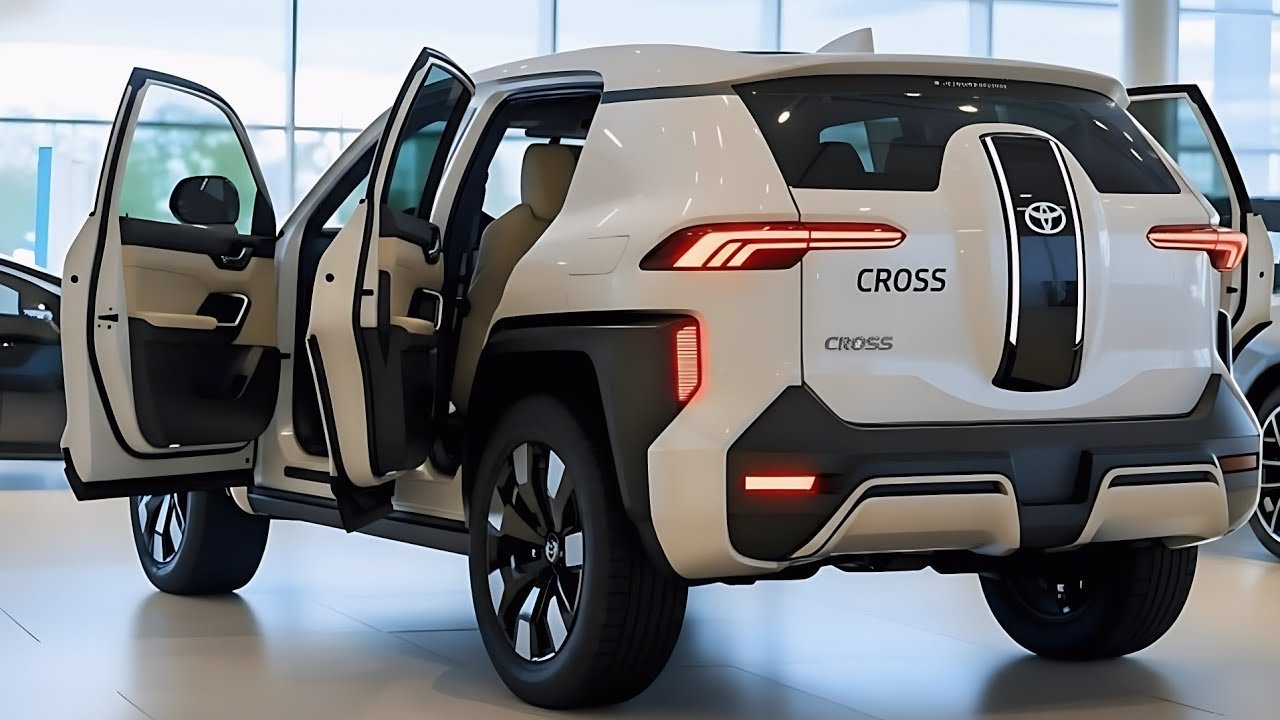
The Toyota Corolla Cross has always been the kind of vehicle that doesn’t try too hard to impress—it’s reliable, practical, and gets the job done without any drama, whether you’re hauling groceries or chasing sunsets on a weekend drive. For 2025, Toyota kept that understated charm but added a few thoughtful updates that make it feel even more like the perfect everyday companion: a smoother hybrid option, a bigger screen for the dash, and those little safety tweaks that let you relax behind the wheel. Starting around $25,000, it’s the compact SUV for families who want space without the bulk, efficiency without sacrifice, and that quiet Honda-like confidence you can trust for years.
A Shape That’s Easy to Love
You spot a Corolla Cross from a block away—it’s got that clean, upright look with just enough crossover attitude to handle light adventures without pretending to be a full off-roader. The 2025 model refines it with slimmer LED headlights that look sharper at night and a grille that’s a touch bolder, giving it a premium vibe without going over the top. At about 176 inches long and 72 inches wide, it’s nimble enough for city streets but roomy inside for four adults plus gear. The wheelbase stretches things out for a stable ride, and with 8.1 inches of ground clearance, it shrugs off snowdrifts or gravel paths like they’re nothing. Colors like Polymetal Gray or Celestite add a bit of personality, and the 17-inch alloys keep it grounded. Pop the tailgate, and you’ve got 25.5 cubic feet behind the seats—fold them flat for 66.8, enough for bikes, camping kits, or that impulse buy from the home store.
Cabin Comfort: Where the Day Feels Shorter
Slide into the driver’s seat, and it’s like the CR-V wrapped itself around you—soft materials, logical controls, and enough space to breathe without feeling lost in a cavern. The dashboard is driver-focused, with a 8-inch touchscreen (9-inch on higher trims) that runs Apple CarPlay and Android Auto so smoothly you forget it’s there—just pull up your playlist or maps and go. The digital cluster up front is customizable, showing speed, fuel, and hybrid flow if you’ve got that version, all at a glance. Dual-zone climate keeps the front cool while the back stays happy, and the seats hug you just right for hours on end. It’s quiet inside too—no wind howl or engine buzz to drown out conversations or podcasts. On top models, leather, a moonroof, and wireless charging turn it into a rolling lounge, but even the base feels welcoming, like it’s glad you’re there.
The Drive: Effortless and Engaging
Fire it up, and the 2.0L four-cylinder (169 hp, 151 lb-ft) or hybrid (196 hp combined) hums with that Toyota smoothness—peppy enough for merging onto highways (0-60 in about 8 seconds) but refined for stop-and-go drudgery. The CVT shifts seamlessly, keeping revs low and noise down, and front-wheel drive (AWD optional) makes it feel light and responsive. Fuel economy? 31 city/33 highway for gas—real-world 30 mpg mixed is a breeze, and the hybrid bumps it to 40 combined for 500+ miles per tank. The suspension soaks up rough patches without feeling bouncy, and steering is direct but forgiving, turning errands into something almost enjoyable. It’s not a sports car, but there’s a quiet thrill in how it just goes, mile after mile.
Safety: The Guardian You Don’t Notice
Honda Sensing is woven in so naturally you barely think about it—adaptive cruise that paces with traffic, lane-keeping that gently corrects without yanking the wheel, collision braking that steps in if you’re distracted. Six airbags, ABS, stability control, and a rear camera (360-degree on top trims) cover the bases, earning top marks from NHTSA and IIHS. It’s the kind of safety that lets you focus on the drive, not the what-ifs, with blind-spot warnings that chime softly before you change lanes.
Everyday Touches That Matter
USB ports in every row keep devices alive, Bluetooth audio fills the cabin with your playlist, and the available Bose speakers turn drives into concerts. The moonroof lets in light without glare, and hands-free power tailgate makes loading a one-handed job. It’s not gadget overload, but every bit feels useful—like the in-cabin microphone for clearer calls or the wireless charger that ends cable tangles.
Price: Smart Money
From $25,000 for the LX to $35,000 for the hybrid Touring, it’s a range that fits most budgets. On-road adds a bit for taxes, but deals like $1,000 off or low APR make it easier. Maintenance is Honda-cheap—$500-700 a year—and the 3-year/36,000-mile warranty has your back.
Who It’s For
The CR-V is for the parent juggling carpools and coffee runs, the weekend camper who needs space for tents, or the city dweller who wants SUV height without truck thirst. It’s not for off-road extremists or speed junkies—it’s for real life.
A Few Honest Gripes
The CVT can feel rubbery under hard acceleration, base trims skip the bigger screen, and cargo space behind the third row is tight if you max out seating. But for most, it’s nitpicking.
Why It Stands Out
Against the RAV4, it’s quieter and more refined; versus the Tucson, it’s simpler without sacrificing space; and it edges the Escape in resale value. It’s the SUV that doesn’t try too hard—and wins because of it.
Wrapping It Up
The 2025 Honda CR-V isn’t chasing headlines. It’s chasing that sweet spot where comfort meets capability, where family trips feel easy and solo drives feel rewarding. Test one—you’ll see why it’s been a bestseller for a reason.